(1).png)
The person
The expert on their own experience. We listen to how they communicate, whether that is speech, writing, AAC, gesture or another way of showing what helps and what doesn’t.

At Autism & Me, implementation means turning good intentions into clear action. It is the stage where recommendations are not simply handed over, but organised into practical steps that can be understood, prioritised, and put into practice. We know that many schools, families, organisations, and services want to make meaningful changes but do not always know where to begin, what to do first, or how to sustain progress over time. That is why our implementation process is structured, realistic, and easy to follow.
Step 1: Identify what is getting in the way
We begin by looking closely at the current situation. This includes the environment, communication, routines, expectations, sensory demands, and any points where pressure, confusion, or exclusion are being created. The aim is to understand where the barriers are and how they are affecting everyday participation.
Step 2: Clarify what needs to change
Once the barriers are clear, we identify the most important areas for action. Not every issue needs to be addressed at once. We help prioritise the changes that are likely to make the greatest difference first, so that implementation feels manageable rather than overwhelming.
Step 3: Make recommendations practical
Recommendations only work if people can actually use them. We translate observations and evidence into clear, actionable steps that fit the setting. This may include changes to communication, layout, routines, staff practice, transition planning, sensory supports, or policy. Each recommendation is designed to be understandable, relevant, and realistic.
Step 4: Put supports in place
This is the stage where changes begin to happen. Depending on the setting, this may involve introducing new strategies, adjusting the environment, creating calmer spaces, changing how information is shared, improving preparation for transitions, or building more flexible responses into everyday practice. The focus is on making the setting work better in real life, not just on paper.
Step 5: Support the people involved
Implementation is not only about systems. It is also about people. Families, staff, teachers, managers, and wider teams often need support as changes are introduced. We help ensure that people understand the purpose of the changes, feel more confident in applying them, and have space to reflect on what is working and what still needs attention.
Step 6: Review and adjust
Implementation should never be treated as fixed or finished after one attempt. Needs change, settings change, and some strategies work better in practice than others. We review progress, look at what has improved, identify where challenges remain, and make adjustments where needed. This helps ensure that change is responsive and sustainable.
Step 7: Build for long-term practice
The final aim is not temporary improvement, but stronger long-term practice. We want settings to feel more capable, more confident, and better equipped to respond well over time. That means embedding good practice into everyday systems so that inclusion is not dependent on one person, one moment, or one crisis.
Our implementation process is designed to be clear, step-by-step, and achievable. It helps move from ideas to action, from pressure to structure, and from intention to meaningful change.
I'm always looking for new and exciting opportunities. Let's connect.
087 6918024
Autistic people, and the families and carers who know them best, are the experts. Everything we do begins by listening to them.
Not where you want them to be. Where they are, in the here and now.
That is where every plan should begin.We see the value of listening to the person with autism and to their family and carers. Professional knowledge matters, but it works best when it supports their voice and their choices.
The expert on their own experience. We listen to how they communicate, whether that is speech, writing, AAC, gesture or another way of showing what helps and what doesn’t.
They know the person across years, places and moods. Their knowledge fills in what a single meeting never could.
Training and evidence bring real value when they serve the person, not when they replace what the person and family tell us.
“Here is where you should be. Let’s get you there.”
“Tell us where you are today. We’ll start from there.”
Autism & Me is a team of professionals from across Ireland who work in education, industry, health, finance, community services and public-sector roles. Many of us are neurodivergent, and many are parents, carers and long-standing advocates.
What connects us is a shared commitment to building an Ireland where autistic people can access school, work, services and community life with dignity, clarity and ease.
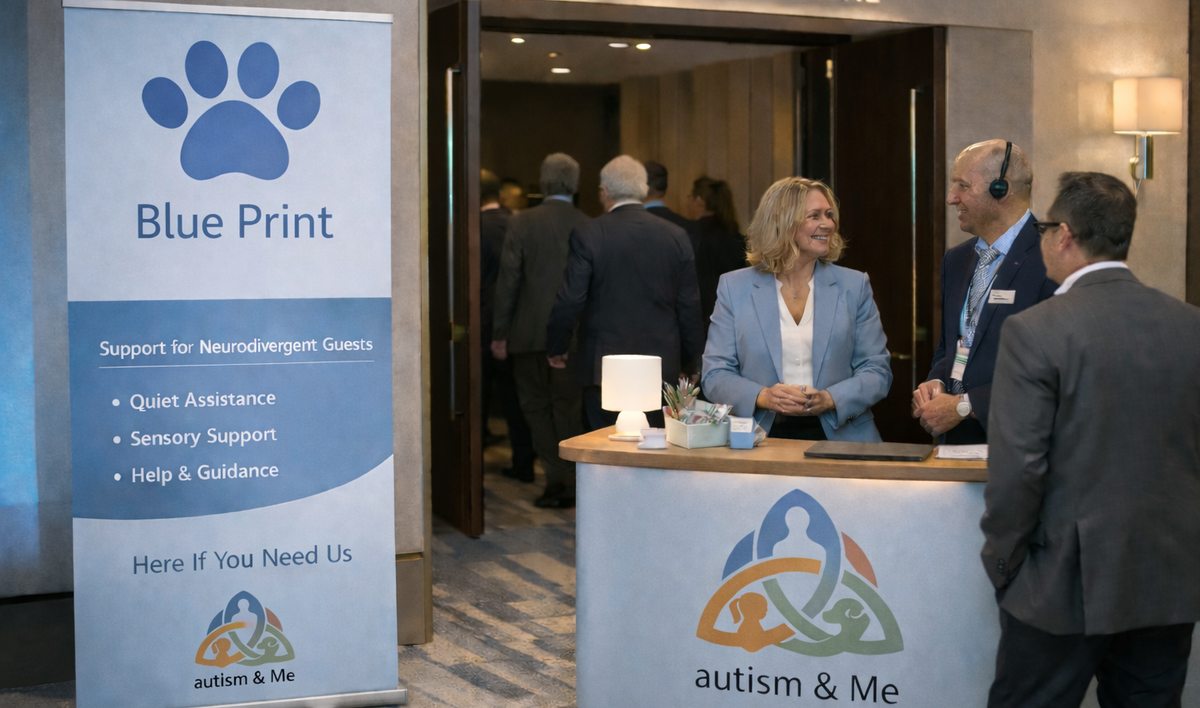
We deliver neurodiversity-affirming training, consultancy and practical tools that support Ireland’s Autism Innovation Strategy, across home, school, workplace and community settings.
Neurodiversity-affirming training for schools, public services and organisations.
We look at your setting with you and agree what to change, starting with the people in it.
Resources you can use straight away, including iLEARN, our tailored learning approach.
Our focus is practical. We do not stay in theory. We focus on what can be applied in real situations.
Across Ireland, systems are often overstretched. Supports are not always designed for the level of need now present, leaving individuals and families navigating environments that do not fully support them.
Autism & Me responds with structured, evidence-informed approaches that:
iLEARN MY WAY starts from the same place as everything we do: the person as they are, here and now. We meet, we listen, we review and we tailor.
It is not only for school. It applies in every sector, because we all learn and respond to the environments we find ourselves in.
Small changes can make profound differences to a person with autism, if, and only if, they are heard.
You don’t need to change everything at once. We help you listen, then act, one small step at a time.
Hear from the person, in the way they communicate, and from the family and carers who know them.
Look at the setting as it is today: what works, what is hard and what the person notices.
Choose one small, realistic change together, with the person’s say at the centre.
Put it in place, then ask the person how it is going, not just the adults around them.
Keep what helps, adjust what doesn’t, and choose the next small change.
We go at the person’s pace, not the system’s.
Tell us where you are now, at home, in school, at work or in your service, and we will help you find the first step.
Thank you for visiting autismandme.ie. Let us know where you’re connecting from.