(1).png)
The person
The expert on their own experience. We listen to how they communicate, whether that is speech, writing, AAC, gesture or another way of showing what helps and what doesn’t.
At Autism & Me, we believe support should be shaped by need, not by labels alone, not by assumptions, and not by how well someone can mask, cope, or appear to manage on the surface
A needs-based approach means starting with the person in front of us. It means asking what is making participation harder, what support would reduce pressure, and what changes in the environment, communication, routine, or expectation would make life more manageable and more dignified.
This matters because two people with the same diagnosis may have very different experiences, strengths, challenges, sensory profiles, communication styles, and support requirements. It also matters because need can change over time. A child, young person, or adult may need different support depending on health, stress, transition points, family circumstances, school demands, work demands, or what else life is asking of them.
We do not believe people should have to reach crisis point before support is taken seriously. We do not believe families should have to prove distress repeatedly in order to access practical help. We believe good support begins earlier, listens more carefully, and responds more intelligently.
A needs-based approach looks at the whole picture. It considers:
communication needs
sensory needs
emotional regulation
anxiety and uncertainty
transitions and change
access to learning
family pressures
environmental barriers
social demands
physical and cognitive load
It also recognises that support is not only about the individual. Needs often sit in relationship with the wider system. A child may not need to be on a reduced timetable; the classroom may need to be clearer. A young person may not be unwilling; the transition may be poorly supported. A family may not be failing; they may be carrying an impossible amount without joined-up help.
This is why our work is rooted in practical, personalised, and proportionate support. We look at what is needed now, what may be needed next, and what can be put in place to reduce pressure before difficulties deepen.
Our needs-based approach is also deeply connected to universal design. Where possible, we aim not only to respond to individual needs, but to improve the system so that fewer barriers exist in the first place. That means creating environments that are calmer, clearer, more flexible, and easier to navigate for everyone.
For us, a needs-based approach is not a softer phrase. It is a more honest one. It reflects the reality


We bring the world’s best understanding of neurodiversity and make it work—here, in Irish schools, workplaces, and communities.
Evidence meets empathy. Global insight meets local reality. The result: inclusion that isn’t just policy, but practice. Not just aspiration, but action.
This is how you build a future that belongs to everyone.
When systems are designed well, anxiety can ease, confidence can grow, and participation becomes more possible. Isolation gives way to connection, and inclusion stops being treated as an exception and becomes part of the design itself.
This is about building a future that works better for autistic and neurodivergent people, and in doing so, works better for everyone.
Let’s build it together.
Please view all our services here.
Autistic people, and the families and carers who know them best, are the experts. Everything we do begins by listening to them.
Not where you want them to be. Where they are, in the here and now.
That is where every plan should begin.We see the value of listening to the person with autism and to their family and carers. Professional knowledge matters, but it works best when it supports their voice and their choices.
The expert on their own experience. We listen to how they communicate, whether that is speech, writing, AAC, gesture or another way of showing what helps and what doesn’t.
They know the person across years, places and moods. Their knowledge fills in what a single meeting never could.
Training and evidence bring real value when they serve the person, not when they replace what the person and family tell us.
“Here is where you should be. Let’s get you there.”
“Tell us where you are today. We’ll start from there.”
Autism & Me is a team of professionals from across Ireland who work in education, industry, health, finance, community services and public-sector roles. Many of us are neurodivergent, and many are parents, carers and long-standing advocates.
What connects us is a shared commitment to building an Ireland where autistic people can access school, work, services and community life with dignity, clarity and ease.
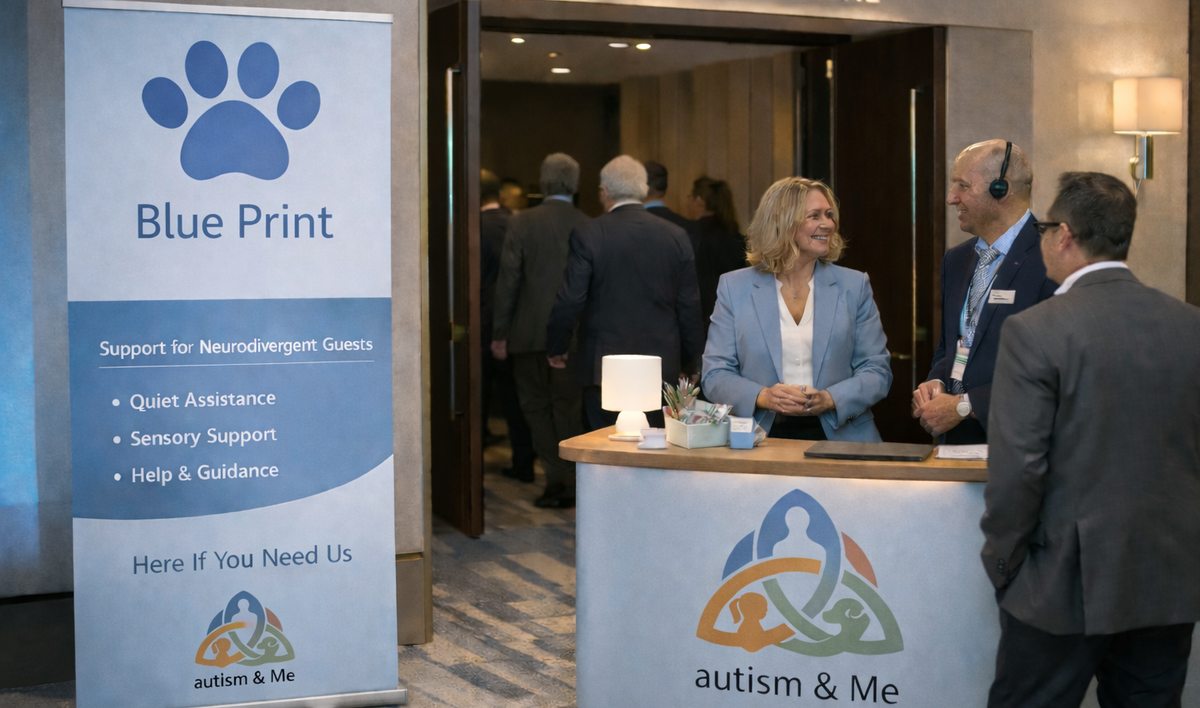
We deliver neurodiversity-affirming training, consultancy and practical tools that support Ireland’s Autism Innovation Strategy, across home, school, workplace and community settings.
Neurodiversity-affirming training for schools, public services and organisations.
We look at your setting with you and agree what to change, starting with the people in it.
Resources you can use straight away, including iLEARN, our tailored learning approach.
Our focus is practical. We do not stay in theory. We focus on what can be applied in real situations.
Across Ireland, systems are often overstretched. Supports are not always designed for the level of need now present, leaving individuals and families navigating environments that do not fully support them.
Autism & Me responds with structured, evidence-informed approaches that:
iLEARN MY WAY starts from the same place as everything we do: the person as they are, here and now. We meet, we listen, we review and we tailor.
It is not only for school. It applies in every sector, because we all learn and respond to the environments we find ourselves in.
Small changes can make profound differences to a person with autism, if, and only if, they are heard.
You don’t need to change everything at once. We help you listen, then act, one small step at a time.
Hear from the person, in the way they communicate, and from the family and carers who know them.
Look at the setting as it is today: what works, what is hard and what the person notices.
Choose one small, realistic change together, with the person’s say at the centre.
Put it in place, then ask the person how it is going, not just the adults around them.
Keep what helps, adjust what doesn’t, and choose the next small change.
We go at the person’s pace, not the system’s.
Tell us where you are now, at home, in school, at work or in your service, and we will help you find the first step.
Thank you for visiting autismandme.ie. Let us know where you’re connecting from.